
“So, did Daft Punk really play at your house?”
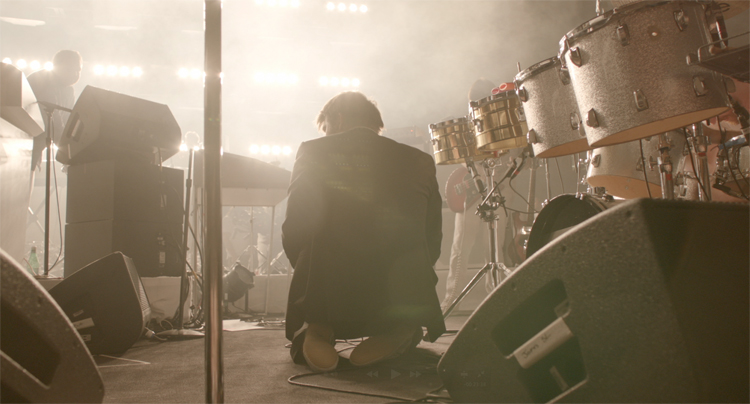
In a sense, last week’s premiere of Shut Up and Play the Hits marked the final comment on the demise of James Murphy’s beloved dance-rock project LCD Soundsystem. The new documentary covers the days immediately preceding and following LCD’s massive final show at Madison Square Garden through the eyes of its frontman. The film also focuses on many of the themes that the band itself mined over the course of its ten year existence: getting old, staying relevant, catching up with the rapid passage of time, and questioning how a self-proclaimed ‘normal guy’ fits into the rock star life. Thoughts on the film and the demise of one of last decade’s best and most important bands inside. 
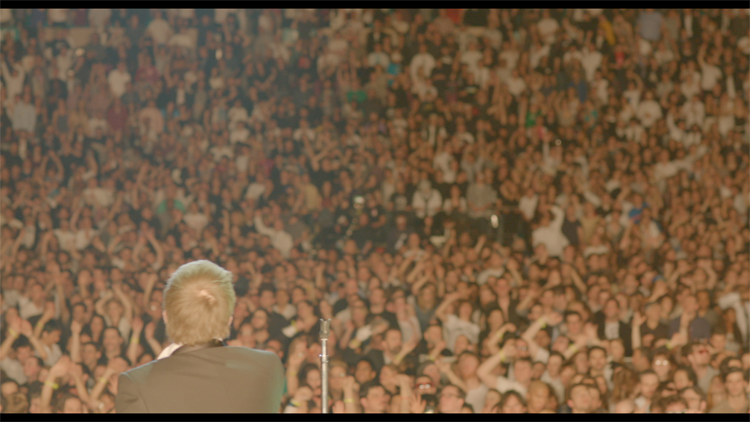
Shut Up and Play the Hits opens with a droning wall of feedback over a credits sequence featuring people and equipment moving about on the final day of LCD Soundsystem’s life. On April 2, 2011, LCD played its final show ever at New York’s Madison Square Garden. In Murphy’s words, it was “the best funeral ever.” A sold-out crowd (myself included) was regaled with just about every song they could want to hear (and then some) during the three-act, three-hour-plus extravaganza. This was the sound of a top-notch band going out on its absolute peak. When it was all over, the daze that accompanied the walk out of the Garden was conveyed about as effectively as possible by the incessant, all-consuming noise of the film’s opening.
LCD Soundsystem was an important band to me in a couple of different ways. The first is rooted in plain, old-fashioned nostalgia for the period of time in my life around the release of This Is Happening. I listened to that record endlessly for months, and it soundtracked my personal highs and lows pretty perfectly. One of LCD’s greatest strengths is the fact that their music can be both joyous and melancholy at the same time, and that the combination somehow works to their advantage. Take the quintessential LCD Soundsystem song for example: “All My Friends.” The instrumental is driven by an upbeat, jumpy little piano loop, while Murphy’s lyrics are tinged with sadness and regret for friendships slipped away. The song doesn’t wallow in self-pity though; it’s rousing and uplifting and stunning even with its melancholic elements. This band has a remarkable way of making sad things feel less so. I don’t reflect on every part of 2010 positively, but experiencing it to the sounds of This Is Happening and seeing LCD for the first time that July (headlining at my first Pitchfork Music Festival) will surely remain some of my fondest music-related memories.
Secondly, LCD’s status as a hyper-meta ‘record collector’s band’ opened my eyes to a whole hell of a lot of new music which I now love. Murphy has never been afraid to wear his influences on his sleeve, whether in the Mark E. Smith sneer of his early vocal delivery-uh, the Bowie-aping guitars from “All I Want” or the straight-up list of bands he rattles off in “Losing My Edge.” I essentially am one of the “internet seekers” of the latter song, but ironically enough it was Murphy’s music that helped me discover countless other bands. Whether directly or indirectly, my appreciation of numerous punk, post-punk, new wave and electronic acts stems from my love of LCD Soundsystem. Who knows how long it would’ve taken me to check out The Fall if someone hadn’t pointed out to me that Murphy’s vocals were Smith-derived. I never really ‘got’ Bowie’s “Heroes” until after I heard “All I Want.” Same with Iggy Pop’s “Nightclubbing” and LCD’s “Somebody’s Calling Me.” Hell, LCD almost singlehandedly got me interested in electronic music in general, which I had stupidly avoided like the closed-minded teenager I was at the time.
Thirdly, James Murphy is an inspiring guy. 2002’s “Losing My Edge” was the band’s first single, although technically they weren’t even a band yet. A thirty-two year old Murphy recorded and released the song himself, and the actual band wouldn’t come together until much later. By traditional rock standards, that’s pretty late in one’s life to establish a project as big as LCD would become. The odds being stacked against him made seemingly little difference to Murphy, who continued releasing singles and went on to make three albums and embark on two tours, all rapturously received, before calling it quits.
In a bizarre sense, “Losing My Edge” is a kickoff which feels like a statement of cessation. It’s the aging hipster’s lament: a hilarious but deadly serious chronicle of a DJ, musician and all-around music geek watching his credibility being swallowed up and rendered irrelevant by the web. As an impressionable, burgeoning young music geek myself hearing that song for the first time, I wasn’t sure if I was in on the joke or the target of it. Even now I’m not totally sure, but I do know that it helped shape my outlook on the realm of music. There’s an entire universe of obscure bands, rare compilations and sought-after white label vinyl out there, and everyone will claim to know more about it and own more of it than you do. Murphy’s in-song character is flustered and defensive about it, but the fact that the man himself used this subject matter as a jumping-off point for such a successful and important band should demonstrate something to all of us about the relative meaninglessness of ‘cool.’
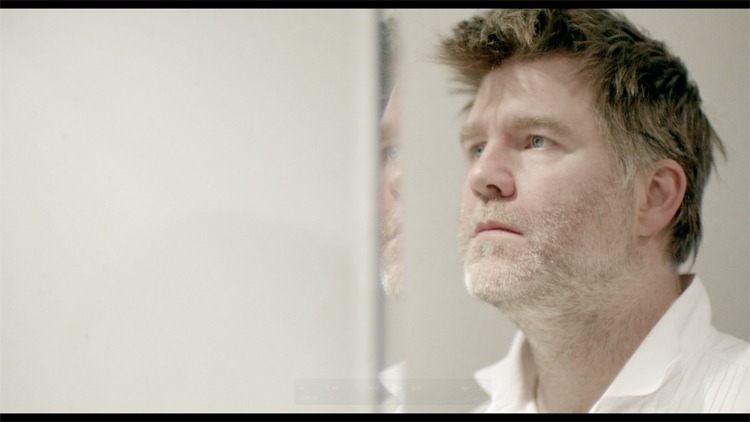
Throughout Shut Up and Play the Hits, you’ll hear Murphy refer to himself more than once as an unremarkable guy. Rock stars like David Bowie, he says, “are from fucking Mars.” He, on the other hand, is rooted firmly here on Earth. The film’s intimate shots of Murphy waking the morning after the final show, walking his dog, shaving, making coffee, serve to humanize him even further. Throughout LCD’s run, he never tried to present himself as something he wasn’t. His lyrics, music and on-stage persona were as honest, self-conscious and self-deprecating as could be. All of that made his ascent to indie rock star status not only surprising, but also inspiring for the self-doubters out there. If Murphy taught us one thing, it’s that you don’t have to be Bowie or Jagger or Iggy incarnate to make something of yourself in the world of music. Dedication, honesty and a love of the craft can still take you places.
Understanding Murphy’s resistance to classify himself as a typical rock frontman is key to understanding his decision to end the band. If you followed the end of LCD as it all went down, Play the Hits won’t shine any new light upon what prompted the dismantling. In an interview with pop culture author/essayist/obsessive Chuck Klosterman which unfolds throughout the film, Murphy spells out what he’s been telling various publications for the past year: LCD’s two options after This Is Happening were to get bigger or to fail trying, and neither particularly appealed to him. The film does lead us to a revelation of sorts though, in a handful of harrowing scenes that demonstrate the true weight of the decision. LCD’s final moments on stage, consisting of an extended “New York I Love You, But You’re Bringing Me Down” complete with blinding white lights and a downpour of thousands of white balloons from the ceiling, remain as stirring on film as they were in person. Seeing Murphy break down in tears whilst examining a storage locker of the band’s soon-to-be-sold touring equipment a few minutes later, however, packs the film’s hardest emotional punch.

A recurring shot of a teary-eyed fan standing in the general admission pit moments after the MSG show ended incurred derisive laughter at my screening of Shut Up and Play the Hits, but I couldn’t help but feel for the guy. I wasn’t shaken to the point of tears, but the ending of LCD’s final show was still a emotionally heavy moment for me and many others. Whether it was the ‘right’ decision to end the band or not is a personal judgement left up to James Murphy, and one which the film would suggest even he isn’t sure about yet. Good decision or bad though, Play the Hits is a testament to the fact that an amazing band went out in spectacular fashion. As funerals go, this one indeed ranks pretty highly.