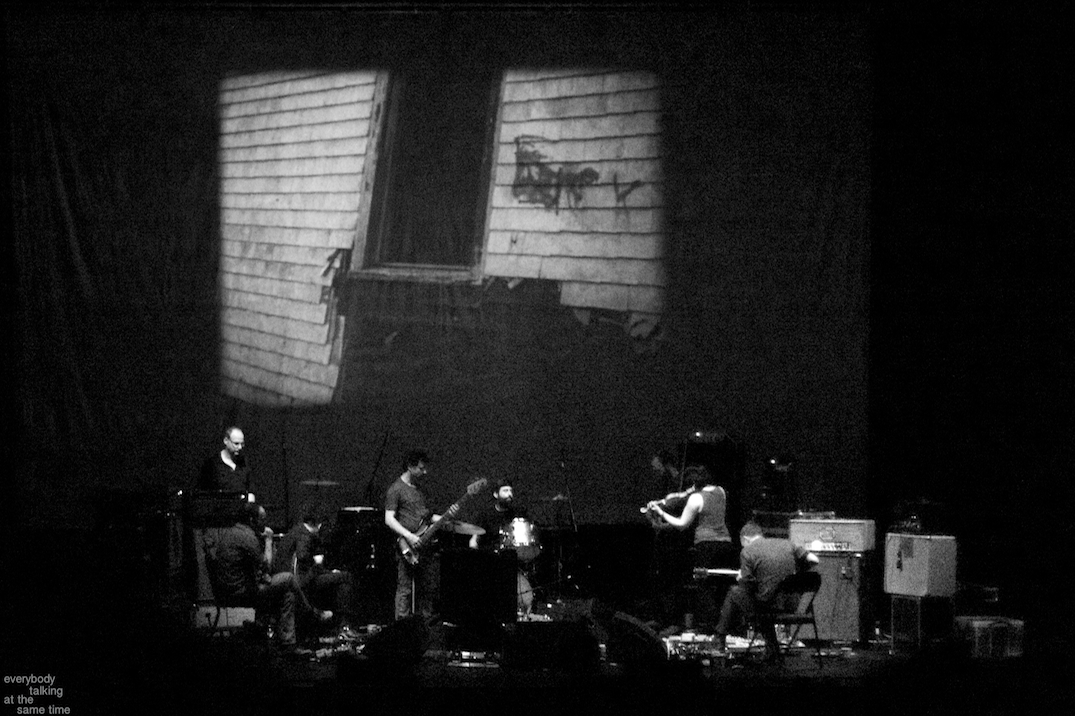
Show review: Godspeed You! Black Emperor at the Orpheum Theatre – 10/1
 Legendary Canadian post-rock pioneers Godspeed You! Black Emperor are in the midst of their first full US tour in nearly a decade, which stopped over at Boston’s Orpheum Theatre last Monday night. Boston’s own Glenn Jones opened the show.
Godspeed have conjured quite a mystery around themselves over the years. The nine-piece collective has no discernible leader, rarely grants interviews and performs with as little crowd interaction as possible. They’re the only festival act I’ve ever seen face away from their thousands of listeners and not utter a single word. The packaging for their 2002 record Yanqui U.X.O. diagrams links between major record companies and weapons manufacturers. They were once detained in Oklahoma on suspicion of being a gang of terrorists. The anecdotes go on and on, but while the precise nature of their politics and personalities remain enigmatic, their personal inscrutability never gets in the way of their musical transcendence.

In 2003, Godspeed announced an indefinite hiatus from which many suspected they would never return. Lucky for us, 2012 has seen them stage a full-fledged comeback. They’re in the midst of extensively touring festivals and concert halls around the world, and they also dropped an out-of-the-blue brand new record at this very show. Imagine Boston’s collective surprise at the merch table. It was one more puzzlingly pleasant piece in the puzzle that is Godspeed, and a harbinger of an amazing evening to come.
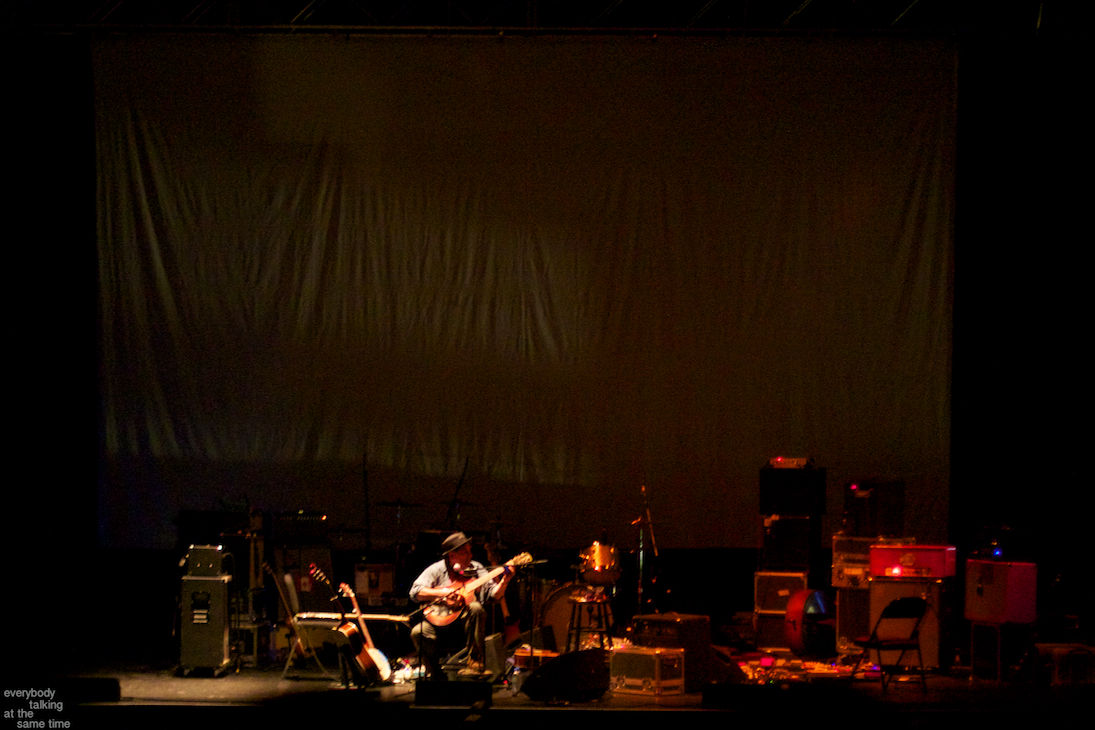
Glenn Jones, of the long-running Boston-based experimental rock crew Cul de Sac, opened with a performance of gorgeous instrumental compositions. Working with acoustic guitars and banjos, Jones demonstrated impeccable finger-picking technique in expressively melodic tunes. The songs were in turn mournful, nostalgic and hopeful, and consistently stunning on a technical level. The set accomplished something unique in keeping a 2,700-seat theater fully engaged by a single man’s guitar in an opener’s slot. A fine example of truly engrossing instrumental music.
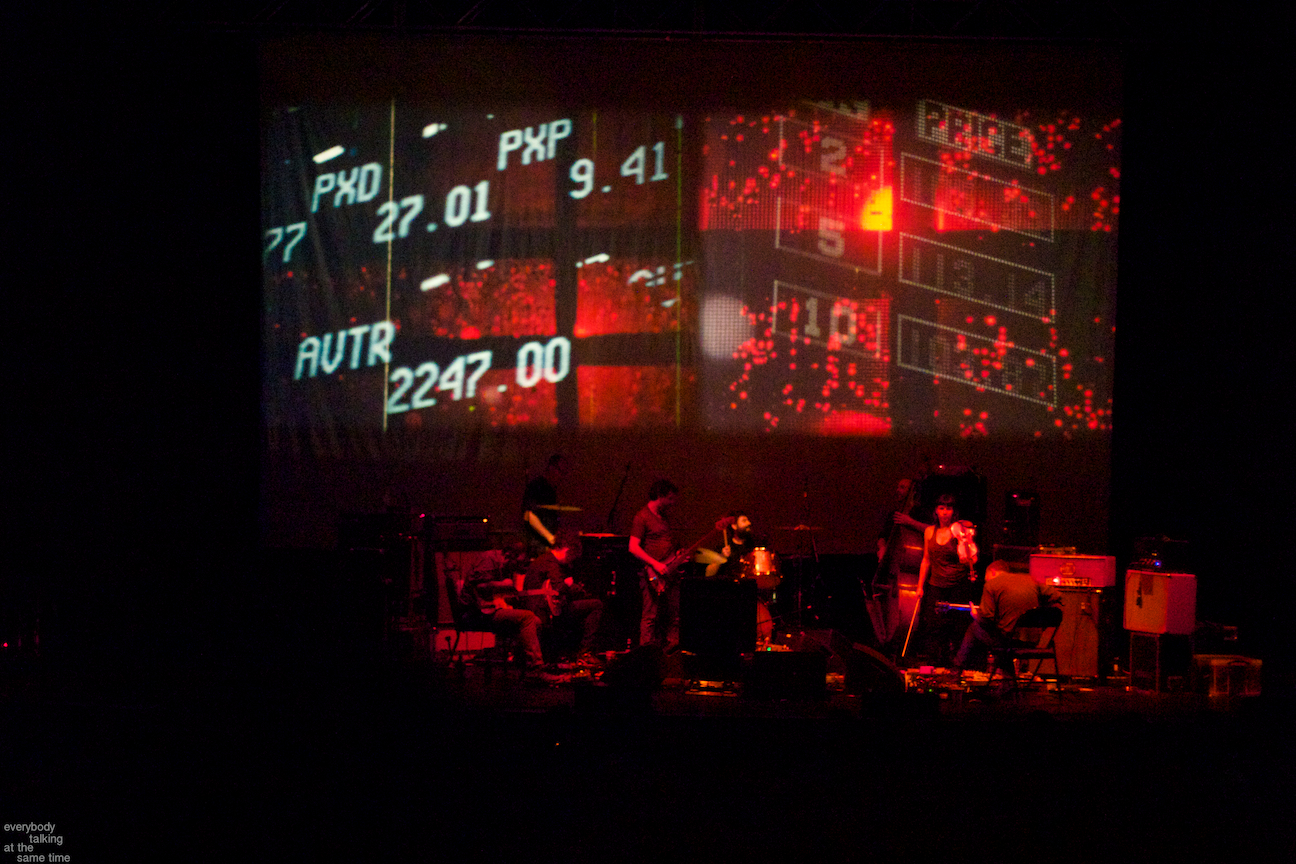
Godspeed opened their own set with their now standard ‘Hope Drone’ – so named for the scrawled word which intermittently flashes in the projection behind the band as they begin each show. Projections are an important part of the Godspeed live experience, running constantly and contributing to the mood and atmosphere set by the music. A visual DJ of sorts travels with the band, mixing a live feed of grainy and mysterious film loops from a bank of projectors throughout the performance. The technique plays with stage lighting in a distinctive way, engulfing the band in brightness or darkness or splashing them with color at opportune moments. It somehow succeeds in making the band’s already impossibly epic crescendos feel even more cinematic.
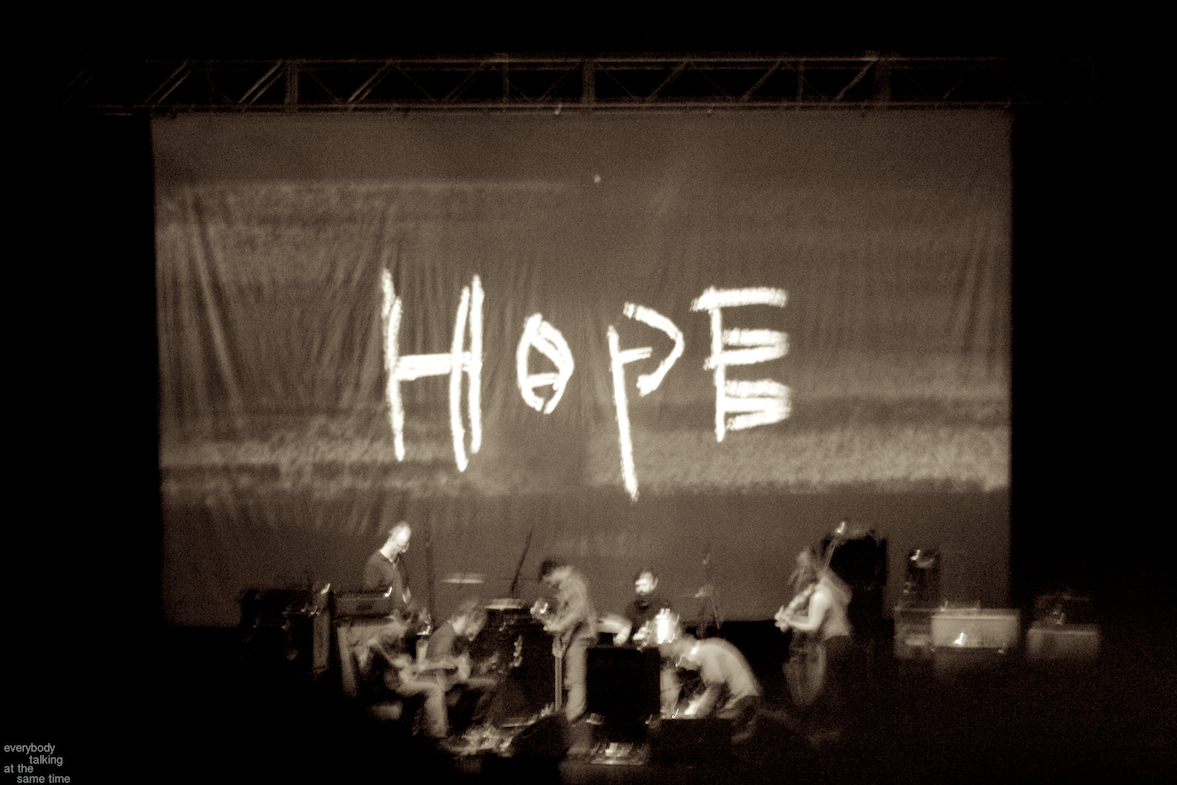
Those huge instrumental valleys and peaks are what the band is renowned for, and they do it better than just about anyone else. The slow-burn tension of the opening stretched on for upwards of 15 minutes before gradually morphing into the towering new song “Mladic,” known on previous tours as “Albanian.” The 20-minute composition takes Godspeed’s signature approach, evolving with internal movements from a whisper to a full-throated roar with a series of dizzying climaxes. “Mladic” is also that track that opens the band’s new record, and it’s a stunning assertion that they are picking up precisely where they left off. Ten years apart have done nothing to lessen their powers.
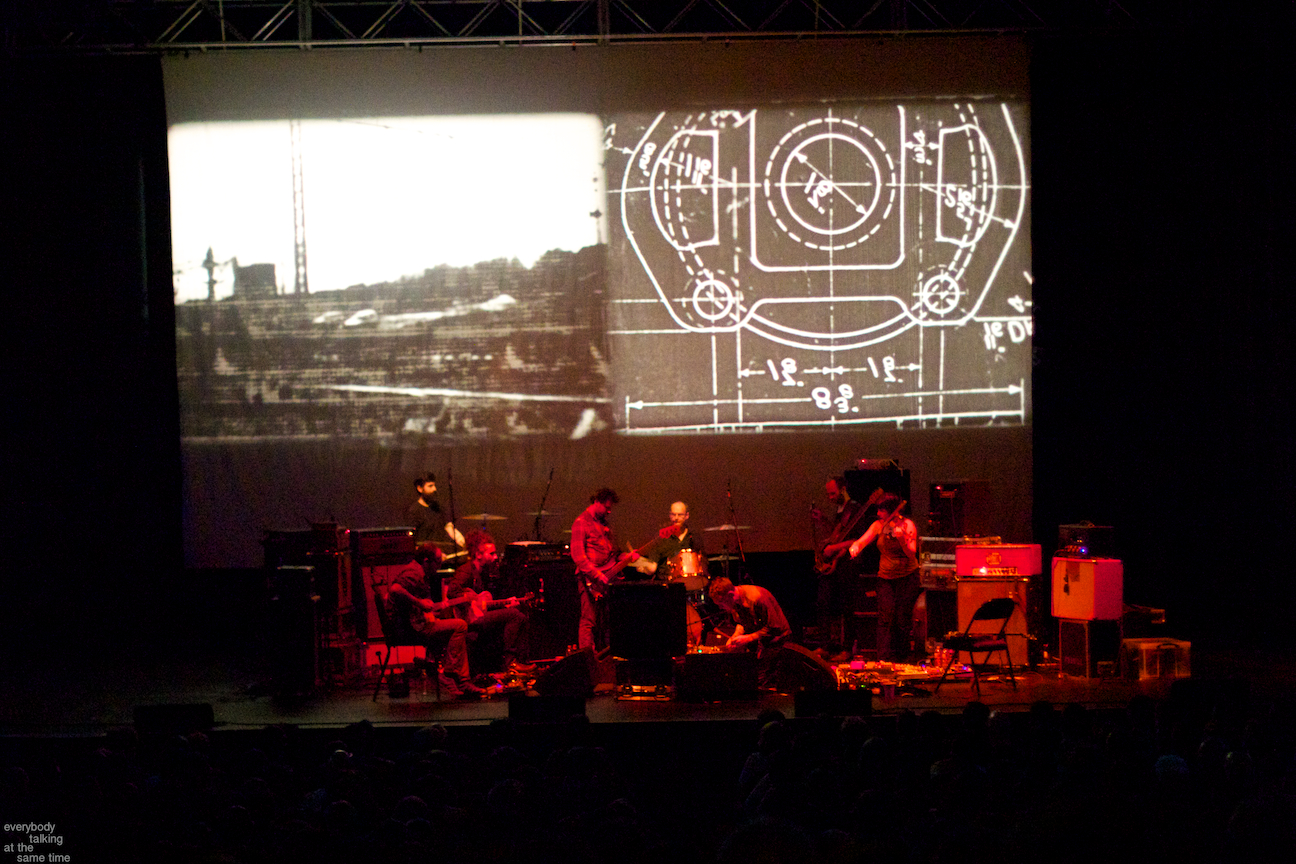
The remainder of the set was composed of “Monheim” from 2000’s Lift Yr Skinny Fists Like Antennas to Heaven, “The Sad Mafioso” from 1997’s F♯ A♯ ∞ and a new, unrecorded song. The spoken word intro to the former drew excited applause from the crowd, as did the ominous opening riff of the latter. The old favorites were well represented, building to the same heights of cathartic, apocalyptic fury they reach on the legendary albums they first appeared on. The unreleased track began with a stark, martial drum pattern which the song’s brooding central movement was constructed around.
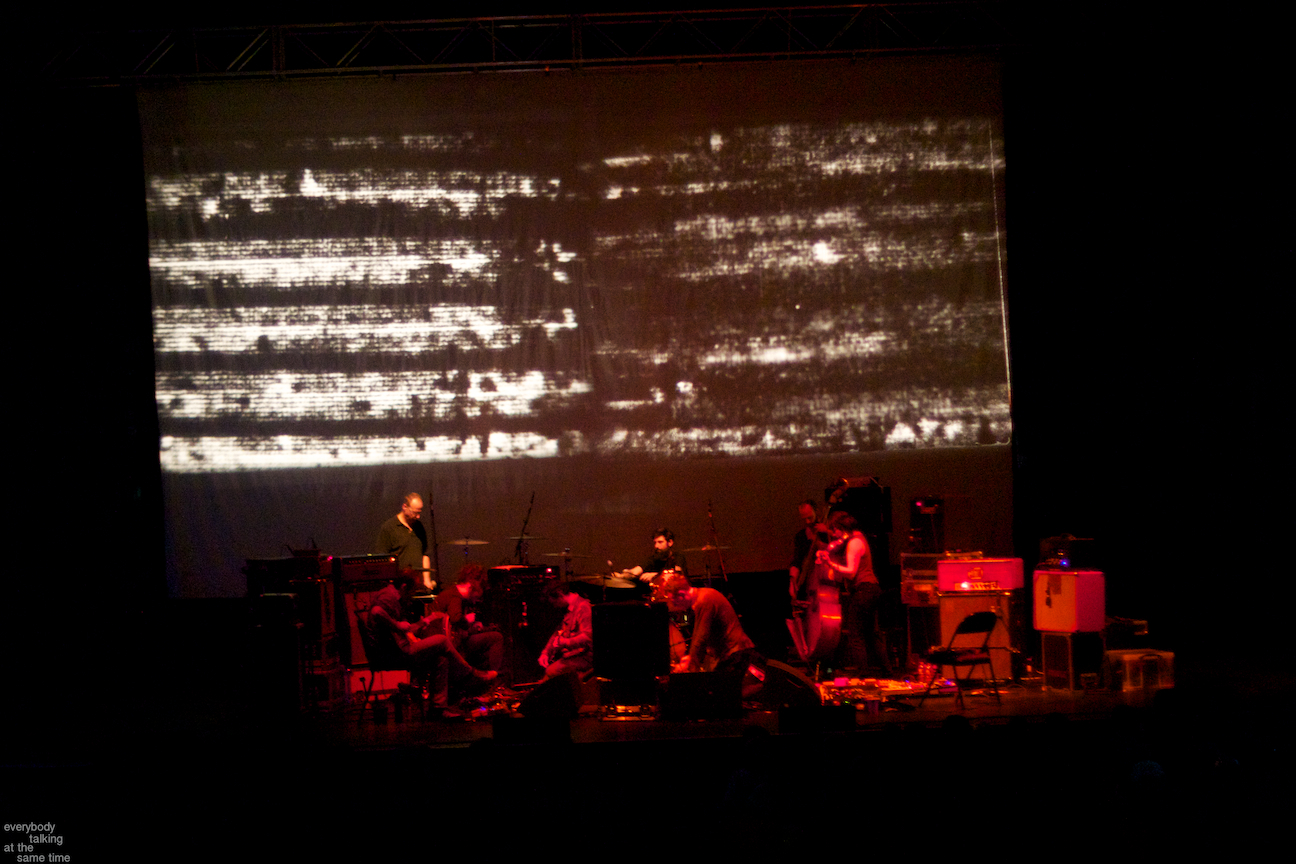
Dark as Godspeed’s songs may seem at first glance, there’s surely happiness to be found therein. The post-apocalypic landscapes and “sewers all muddled with a thousand lonely suicides” of the spoken word interludes that pepper their albums have earned the band a rather gloomy reputation. They juxtapose that quiet darkness with thunderous uplift though. Seeing the band live and hearing each furiously strummed, plucked or pounded note of each crescendo roaring through a theater is almost overwhelming. But ultimately, it feels optimistic. It feels affirming. For all that darkness, there’s a light somewhere at the end. “Hope,” after all, is the single word flashing across that screen.